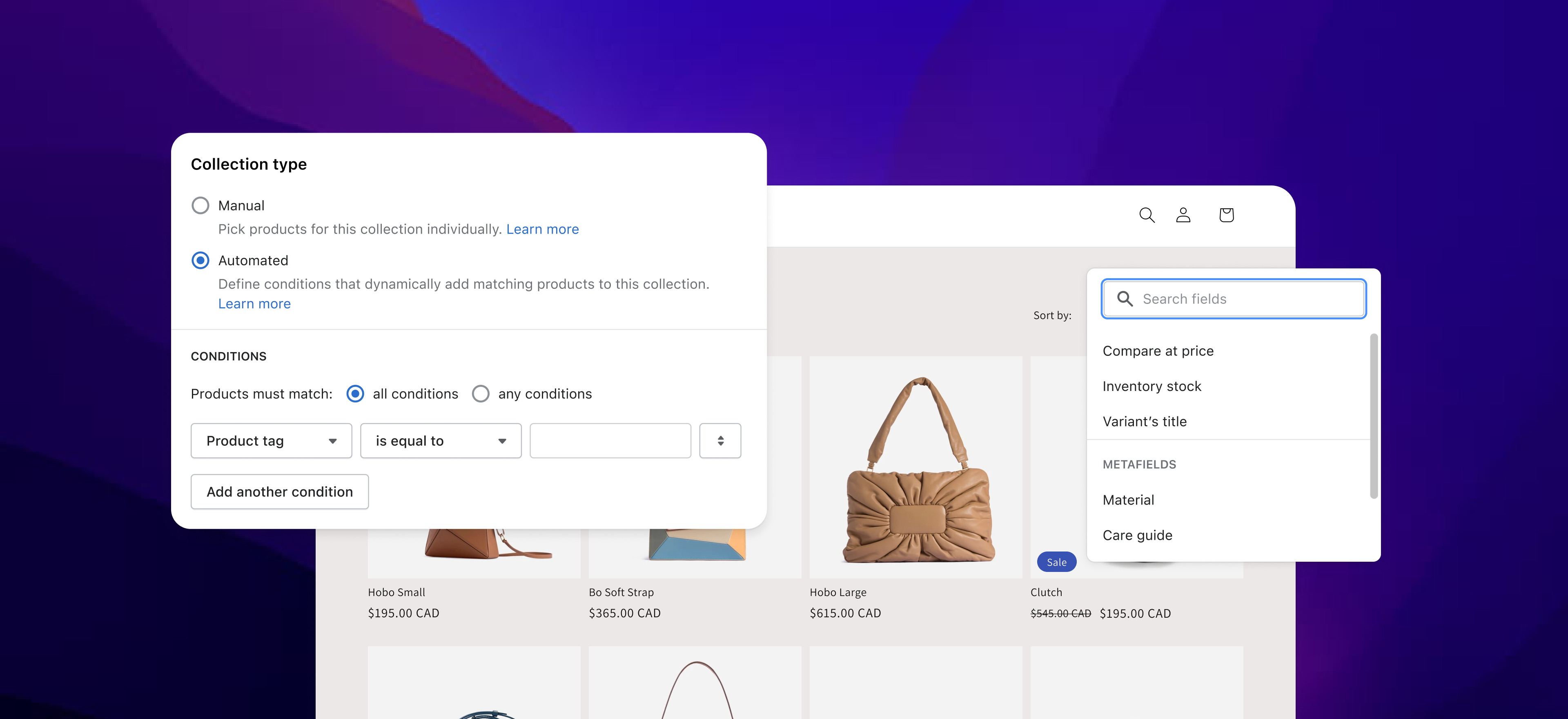
Metafields let merchants store specialized product data beyond Shopify's standard fields. Despite their flexibility, merchants could not use this data to create automated collections, forcing redundant workflows where the same information had to be duplicated just to ensure products were categorized correctly. As lead product designer on the Metafields team, I partnered with engineering, product, and cross-functional teams to remove this friction.
View dev docs
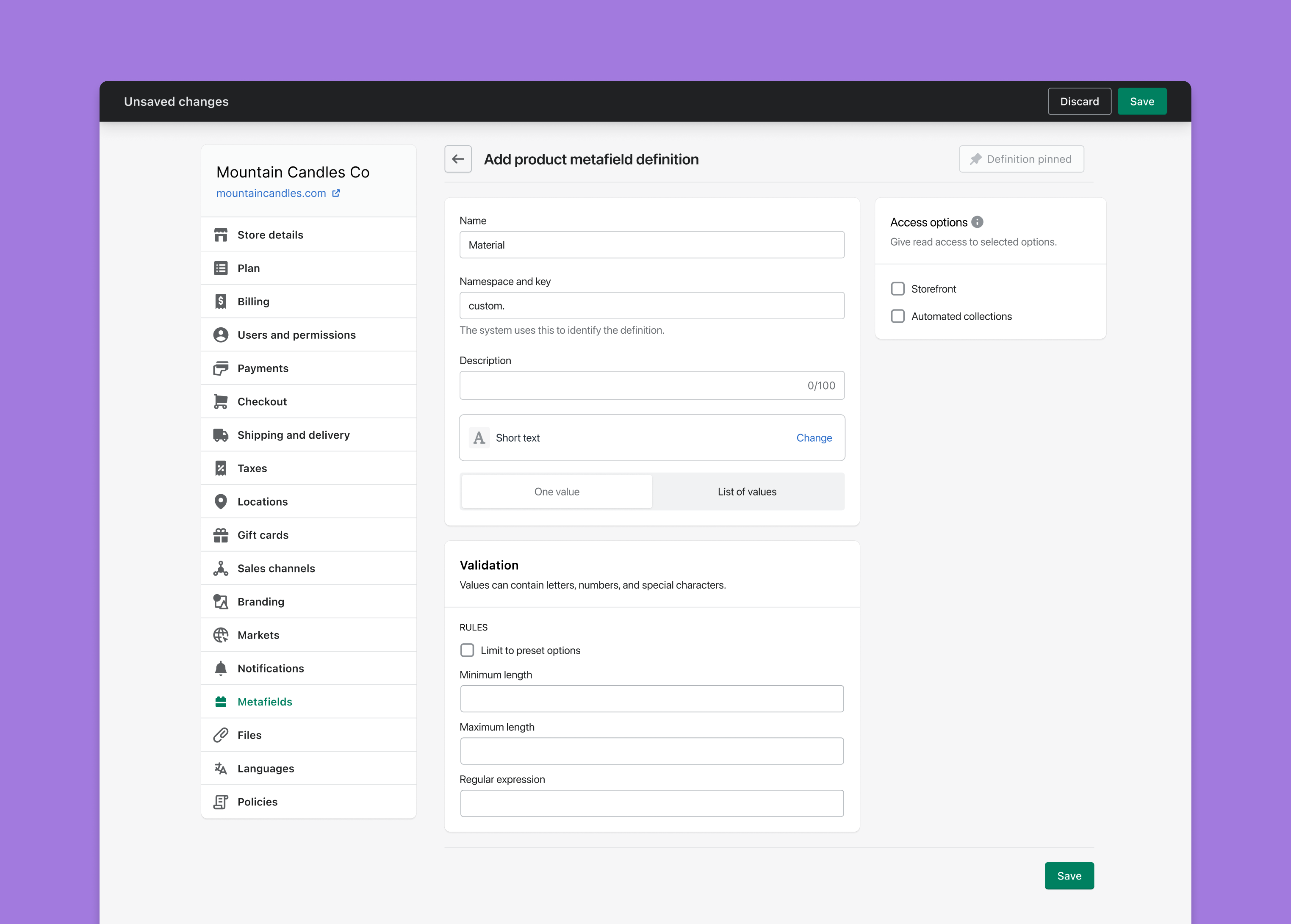
As more merchants adopted metafields, they hit a bottleneck: they couldn't use metafields to build automated collections. That meant:
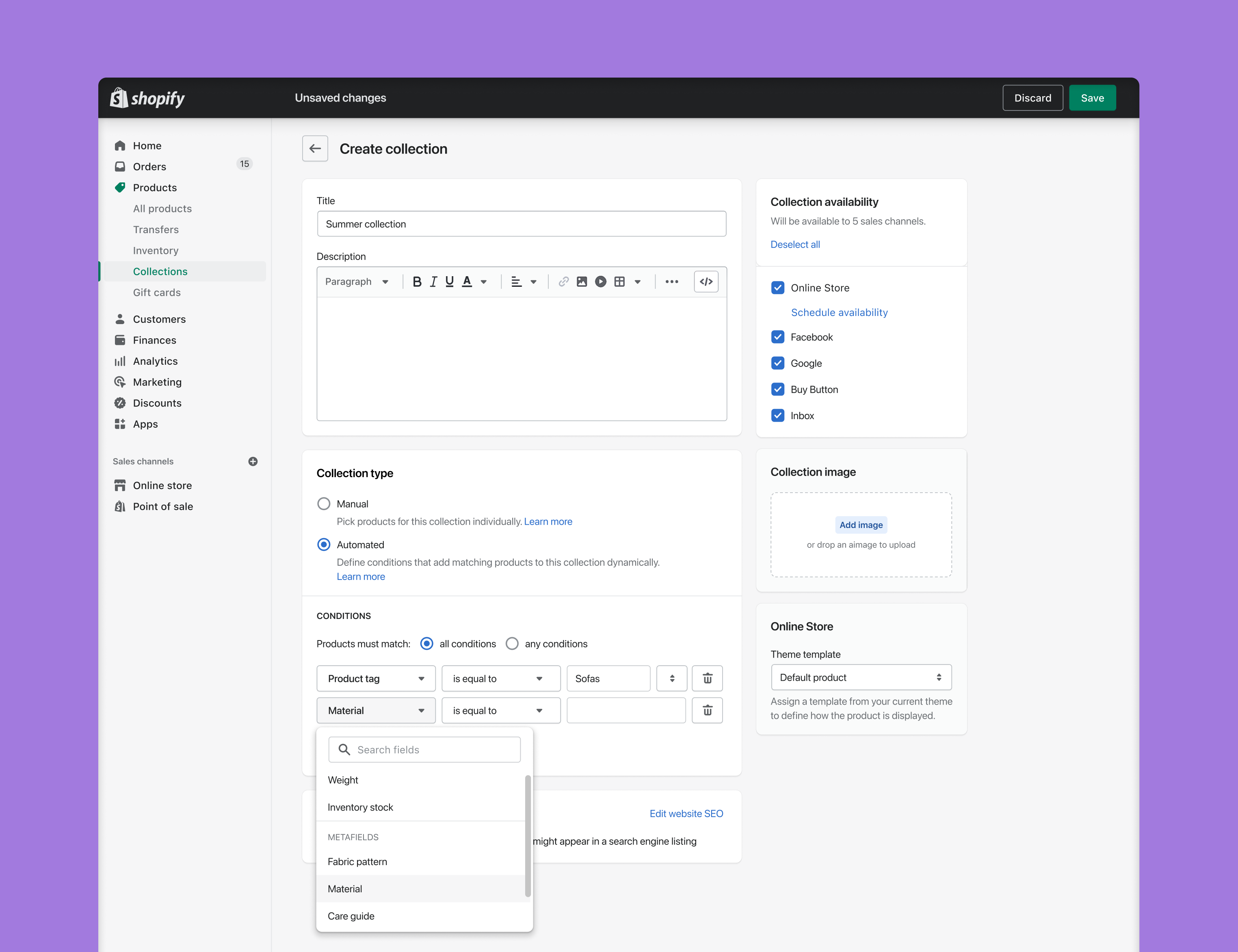
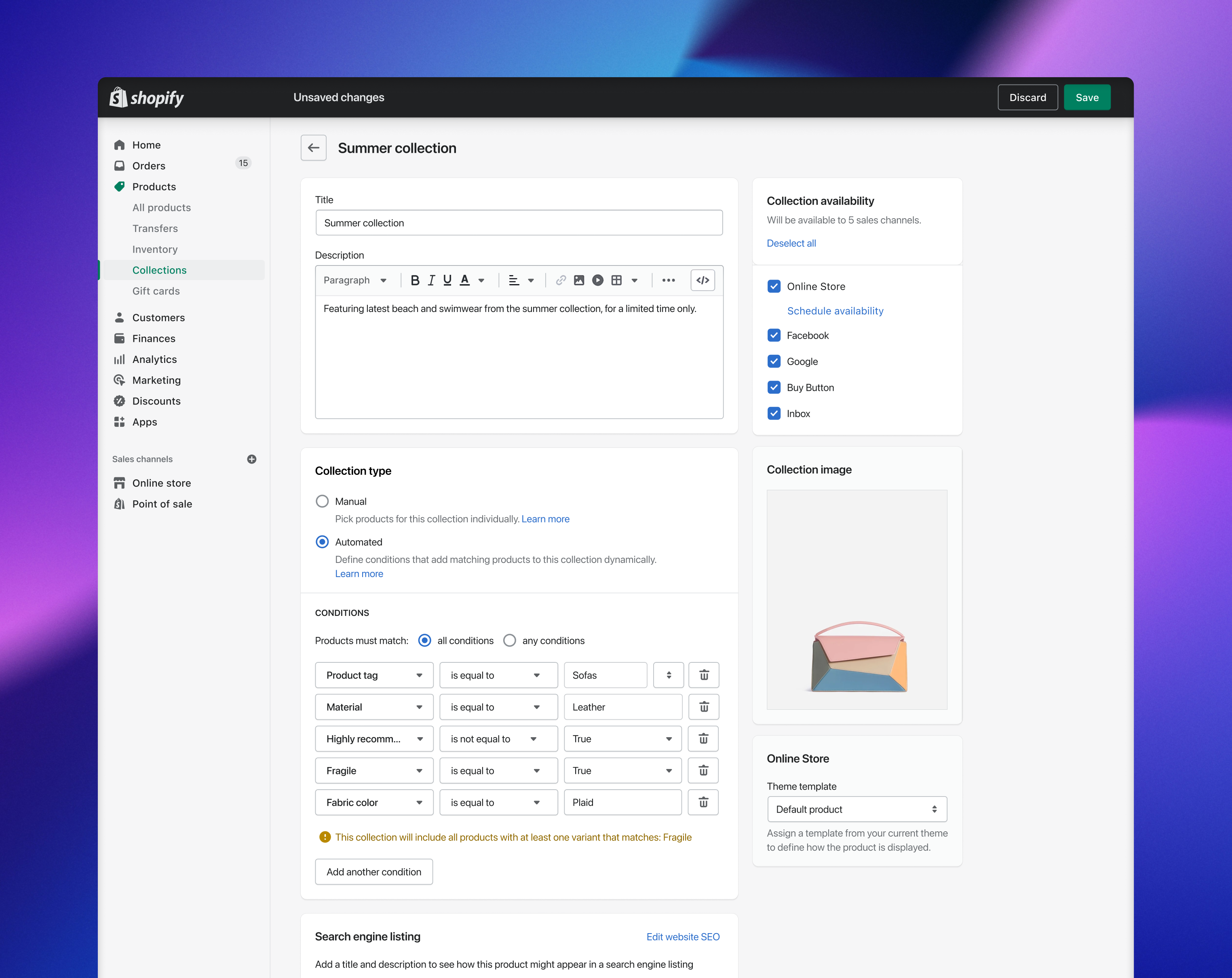
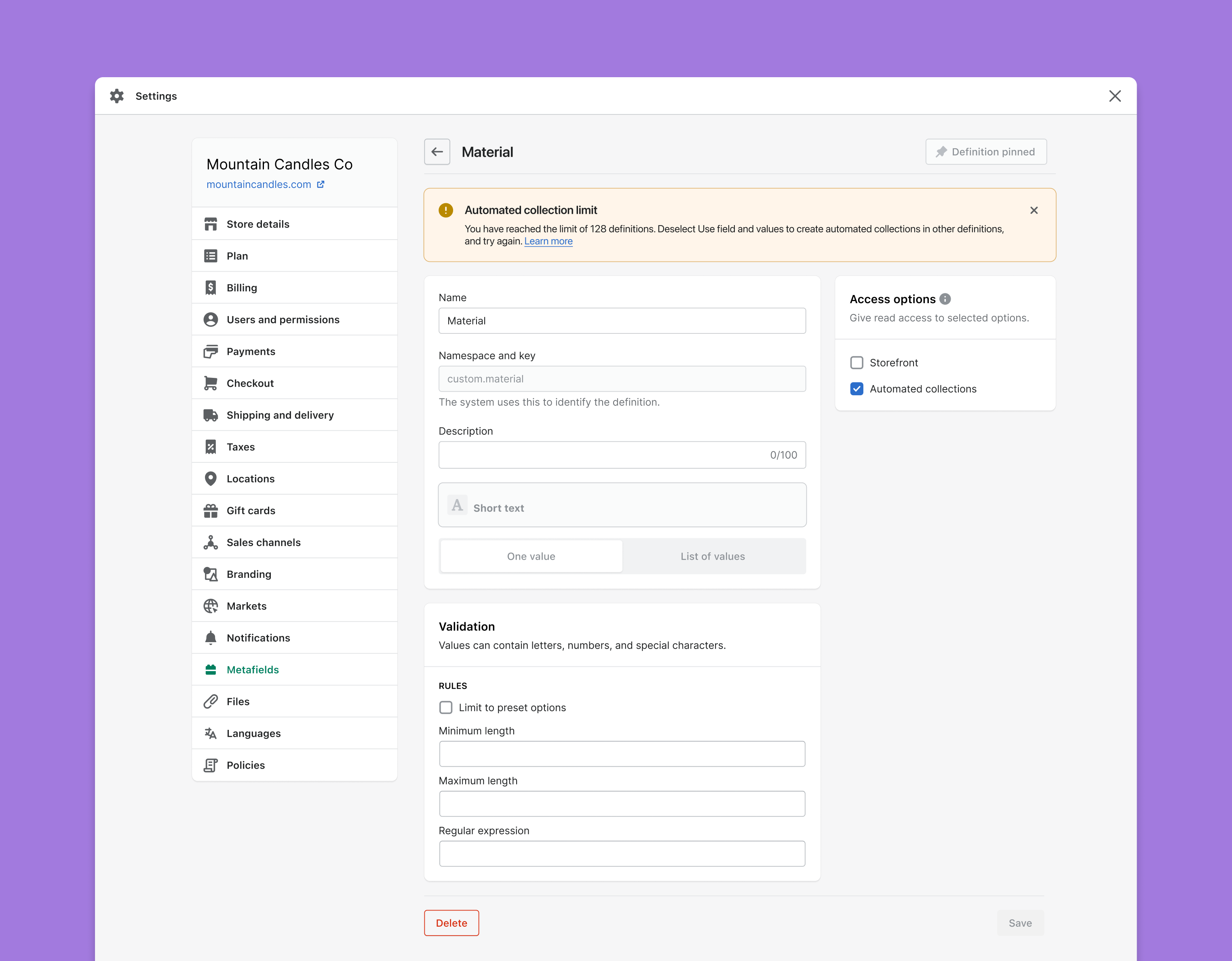
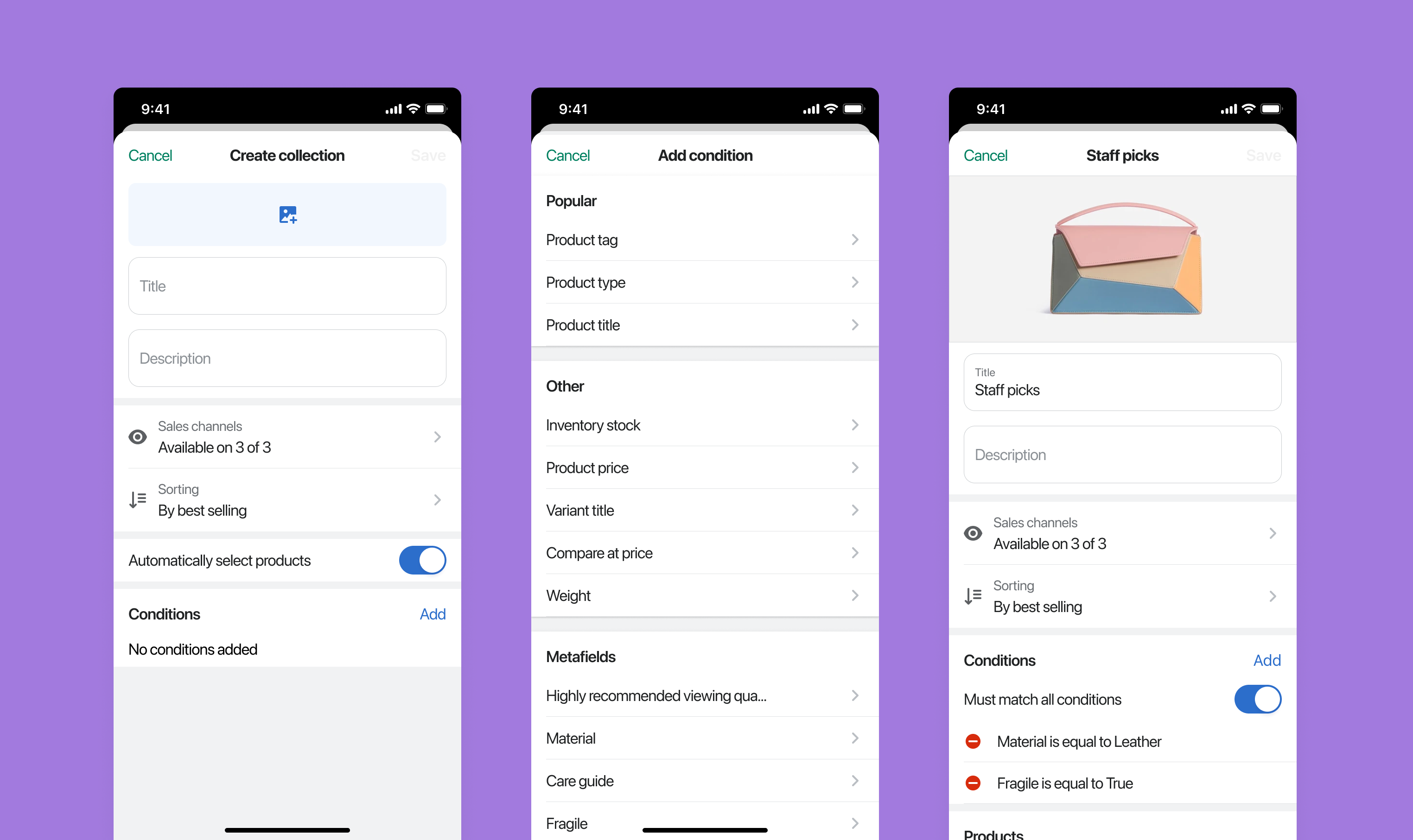
Automated collection conditions could use built-in product fields like tags, type, and vendor, but not metafields. Supporting metafields as a condition would:
I worked closely with engineering, product, the Polaris design system team, and the Merchandising team, which owned collections, so the feature would be easy to use, scale well, and stay consistent with existing patterns in the admin.
The patterns we set here became the foundation for bringing metafields to other parts of the admin, starting with filtering in the product index table.
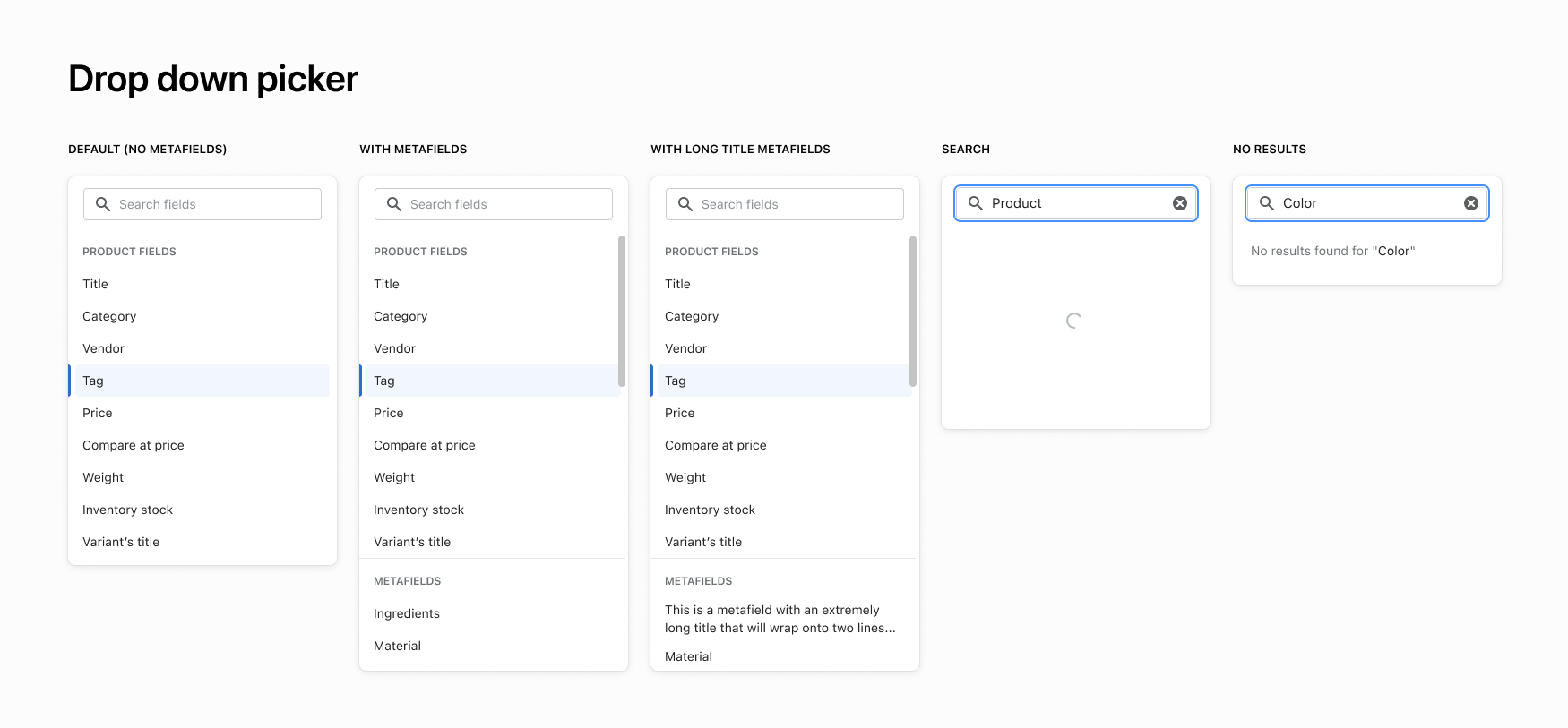
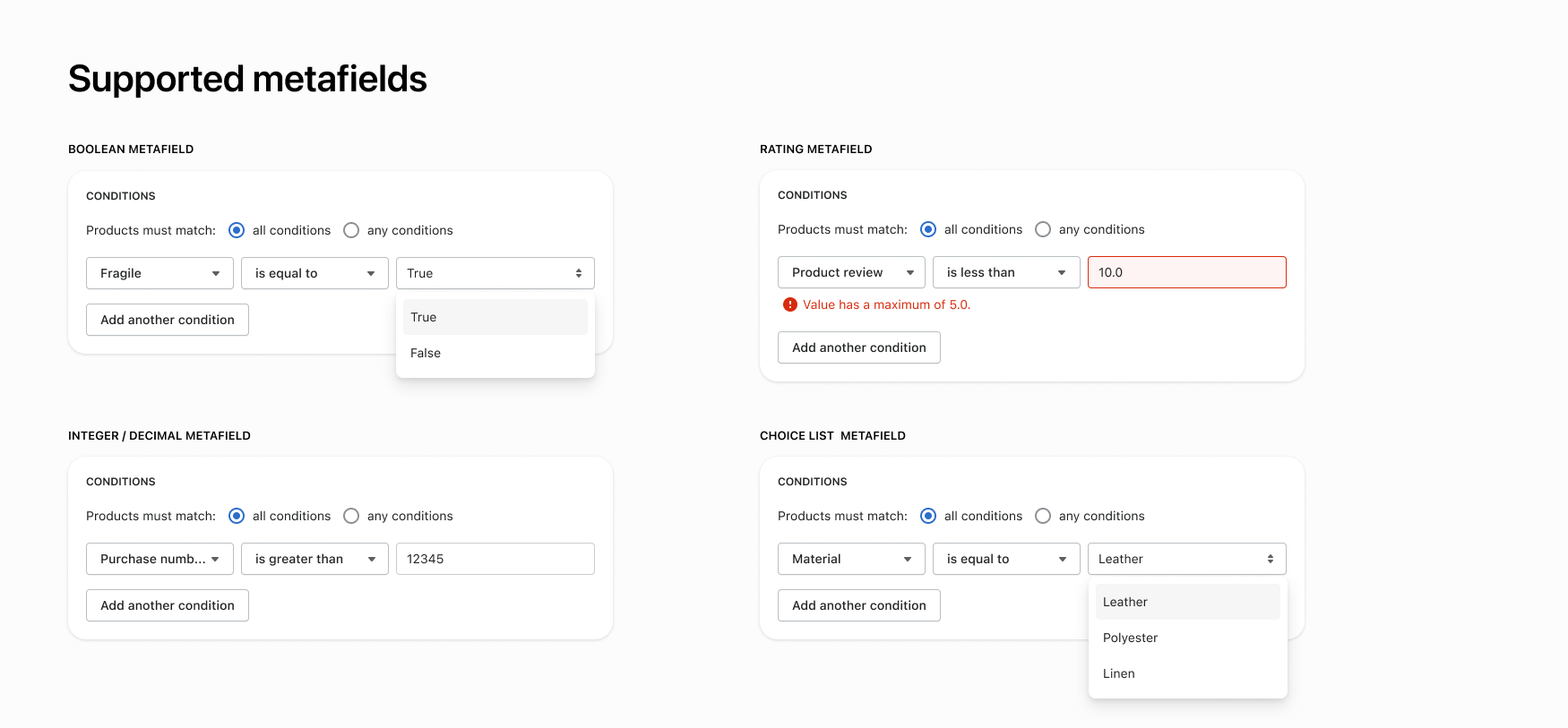
The feature was officially released as part of Shopify Winter Editions 2023. The launch eliminated redundant data workflows and allowed merchants to automate collections using metafields in conditions for the first time.
For a closer look at this project or my full process behind it
Contact me